One plate of red rice, parippu, mallung and a simple fish curry tells you more about Sri Lankan eating than any trend-led nutrition claim ever could. If you are asking, is Sri Lankan food healthy, the honest answer is yes - often very healthy - but it depends on what is on the plate, how it is cooked, and how often richer dishes appear in the weekly rotation.
Sri Lankan food has always carried a practical kind of wisdom. It is built around rice, lentils, greens, coconut, seafood, vegetables, herbs and spices that do more than add flavour. For many households, these are not fashionable ingredients. They are everyday staples from a food culture shaped by farming, coastal life, Ayurveda traditions and home cooking that values balance as much as taste.
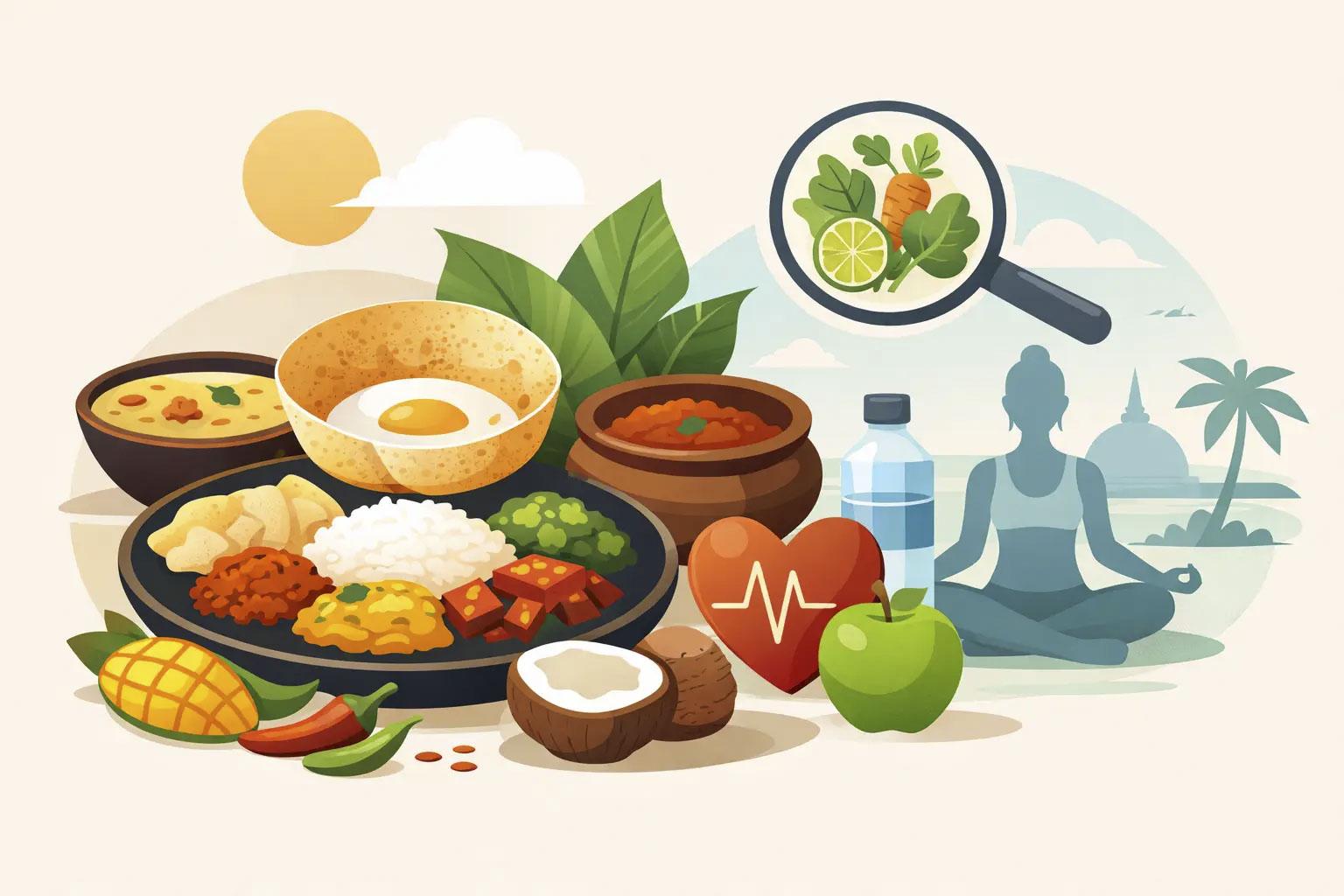
At its best, Sri Lankan food is naturally rich in fibre, plant-based variety and deeply seasoned without relying on heavy processed sauces. A typical home-style meal often includes a grain, a pulse, one or two vegetable dishes, something leafy, and sometimes fish or chicken. That gives you a broad mix of carbohydrates, protein, fats and micronutrients without needing to engineer the meal.
This is one reason Sri Lankan cuisine can fit comfortably into a balanced diet in Britain or anywhere else. Red rice and traditional rice varieties offer more character and often more fibre than highly refined grains. Parippu brings plant protein and comfort in equal measure. Gotu kola sambol, mukunuwenna, kathurumurunga and other leafy dishes add freshness and nutrients that many modern diets struggle to include often enough.
The health value also comes from the way flavour is built. Instead of leaning only on sugar or cream, Sri Lankan cooking uses curry leaves, pandan, turmeric, ginger, garlic, cumin, coriander, fennel, black pepper and true Ceylon cinnamon. These ingredients create depth without making every dish heavy.
The strongest point in favour of Sri Lankan food is variety within a single meal. Rice and curry is not one curry next to plain rice. In a traditional setting, it is a combination of textures and ingredients: lentils, beetroot curry, pumpkin, brinjal, green beans, jackfruit, coconut sambol, mallung, fish or egg, and perhaps yoghurt or fruit afterwards. That kind of plate naturally encourages dietary diversity.
Lentils are especially important. Parippu is one of the most widely loved dishes in Sri Lankan homes and for good reason. It is affordable, filling and nourishing, with protein, fibre and minerals. For vegetarian households or anyone reducing meat, it remains one of the most dependable parts of the cuisine.
Seafood also plays a healthy role when prepared with moderation. Fish curry, ambul thiyal and lightly cooked dried fish dishes can provide protein and beneficial fats. Compared with heavily battered or fried takeaways, these dishes can be far lighter while still tasting unmistakably Sri Lankan.
Then there is coconut, which often raises the biggest question.
Yes, but context matters. Sri Lankan food uses coconut in many forms - fresh coconut, coconut milk, coconut cream and coconut oil. This can make the cuisine sound automatically rich, yet the reality is more nuanced.
Coconut milk-based curries can absolutely be part of a healthy diet, especially when they are eaten with vegetables, lentils and sensible portions. A pumpkin curry with a light coconut milk base is very different from eating rich takeaway food several nights in a row. Fresh grated coconut in sambols and mallung brings flavour, texture and satiety, which can help a meal feel complete.
The trade-off is simple. Some dishes are naturally lighter, while others are more indulgent. A thin parippu, tempered greens and boiled manioc will sit differently from a deep-fried short eat, a sweet milk toffee and a second helping of coconut-rich crab curry. Both belong to the food culture. They just do not serve the same nutritional purpose.
For most people, the healthiest approach is not to fear coconut but to balance it. Use it as Sri Lankan home cooks often do - as one part of the meal, not the whole meal.
When people outside the culture think of Sri Lankan food, they often picture restaurant curries or festive plates. But everyday home food is usually where the healthiest choices live.
Mallung is a good example. Finely shredded greens tossed with coconut, onion and seasoning may look modest, but it delivers fibre and micronutrients in a format that is easy to eat regularly. Parippu remains one of the best comfort foods for both nutrition and value. Fish curry made with tamarind or goraka can be deeply satisfying without becoming overly rich. Pol sambol, in moderate amounts, adds intensity that helps plain staples taste lively.
Even breakfast can be balanced. String hoppers with dhal and coconut sambol, hoppers with lunu miris and a side of curry, or kurakkan-based foods can offer a steadier, more traditional alternative to ultra-processed cereals and pastries.
This is where authentic pantry staples matter. Good quality red rice, pure Ceylon spices, traditional lentils and herbal teas make it easier to cook Sri Lankan food the way it is meant to be cooked - flavourful, generous and grounded in real ingredients.
No cuisine is healthy all the time, and Sri Lankan food is no exception. There are clear occasions when it becomes heavier.
Deep-fried snacks such as rolls, cutlets and pastries are delicious, but they are treat foods. Many festive sweets are high in sugar, ghee or syrup. Some restaurant dishes use more oil, salt or thick coconut cream than a home cook would. White rice in large portions without enough vegetables or protein can also make a meal less balanced.
Processed convenience foods are another factor. Instant mixes, heavily salted dried products and packaged snacks may be useful in a busy household, but they should not define the whole diet. Traditional Sri Lankan eating is at its strongest when the plate includes a range of minimally processed ingredients.
So if someone asks whether Sri Lankan food is healthy or unhealthy, the better answer is that the cuisine gives you both possibilities. The home-style version leans wholesome. The party-table version leans celebratory. Both are real.
The easiest way to make Sri Lankan food work well for modern family life is to keep the traditional structure and adjust the proportions. Let rice share the plate with lentils, vegetables and greens rather than dominate it. Use fish, eggs or chicken as a supporting element rather than the only centrepiece. Rotate richer coconut curries with lighter dishes such as tempered vegetables, sambols and broths.
It also helps to think in terms of combinations. Red rice with parippu and mallung is naturally balanced. Hoppers with egg and a fresh sambol can be satisfying without feeling excessive. Jackfruit curry with leafy greens and a small portion of rice gives plenty of fibre and texture.
Spices can also do more work than people realise. Turmeric, ginger, garlic and pepper bring depth that helps reduce the urge to overuse fat or sugar for flavour. Good ingredients matter here. Authentic Ceylon pantry essentials, of the kind many diaspora households look for through trusted specialists such as Sri Lanka Stores, make a visible difference in both taste and cooking confidence.
That depends on what you compare it with. Against heavily processed ready meals, many Sri Lankan dishes come out very well. Against a lightly dressed salad, a rich coconut curry may look heavier. But this is not a fair test because Sri Lankan meals are designed to be complete meals, not side dishes pretending to be dinner.
Compared with many global cuisines, Sri Lankan food offers strong plant diversity, smart use of legumes, generous spice use and a long tradition of cooking from basic ingredients. Those are real strengths. The main caution points are portion size, fried foods, sugary sweets and how often very rich dishes appear.
For families trying to reconnect with heritage while eating well, that is encouraging news. You do not need to strip Sri Lankan food of its identity to make it healthy. In most cases, you just need to cook it as it has long been cooked at home - with variety, restraint and respect for the ingredients.
A healthy Sri Lankan diet does not have to look austere or joyless. It can still include coconut sambol with warmth from chilli, a fragrant fish curry, a spoonful of parippu, a heap of greens and the comfort of proper rice on the plate. That is the strength of this cuisine. It feeds both appetite and memory, and when you build it around authentic staples and everyday balance, it can be one of the most nourishing ways to eat.