Kithul’s rich, distinctive sweetness begins high in the crown of a Sri Lankan palm. The sap is collected through kithul madeema, the traditional practice of tapping the kithul tree, then carefully boiled into either a pourable treacle or a solid sweet known as kithul hakuru. Kithul jaggery.
If you’re comparing the two, or hoping to find authentic kithul jaggery online from outside Sri Lanka, knowing how they’re made and what to look for can help you shop with greater confidence.
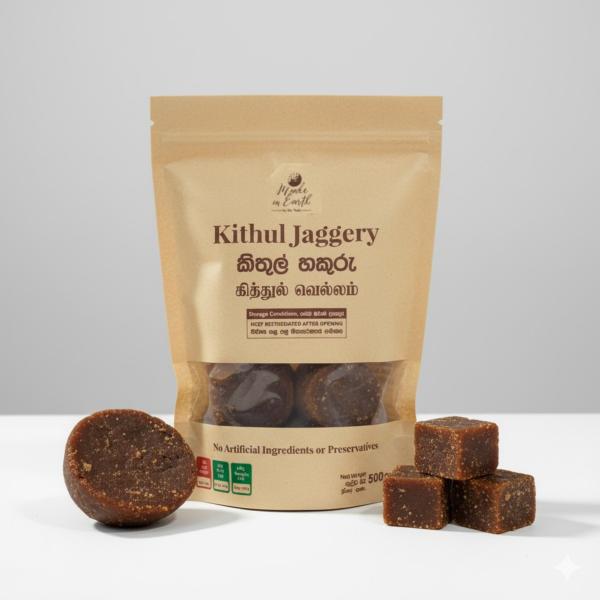
Kithul jaggery, also called kitul jaggery or kithul hakuru, is a solid sweetener made by concentrating sap from the kithul palm, Caryota urens. It is not the same as cane jaggery, even though both products are sold as jaggery. The source of the sweetness is different.
The word hakuru means jaggery in Sinhala. Across South Asia, you may also encounter terms such as gur or gud for jaggery-style sweets, though ingredients and production vary by region.
Kithul’s appeal lies in its particular flavour: often rounded and caramel-like, with earthy, smoky or mineral notes. The balance can vary with the sap and the way it is processed. That individuality is part of what makes this traditional palm sweet so memorable.
Both products begin with sap tapped from the kithul palm’s flower stalk. The difference is mainly the form the sap takes after it is boiled and concentrated.
| Kithul treacle | Kithul jaggery |
|---|---|
| A pourable syrup, also known as kithul pani | A firm, solid sweet, also called kithul hakuru |
| Boiled until it reaches a thick, syrupy consistency | Concentrated further, then cooled and shaped into blocks or pieces |
| Smooth and pourable when handled as intended | Dense and solid, though firmness can vary |
In short, treacle is the syrup; jaggery is the solid form. Neither is automatically more authentic than the other. The best choice depends on which form you want and how it fits your needs.
Traditional kithul tapping calls for skill, patience and familiarity with the tree. As UNESCO describes, tappers climb the palm, prepare and wrap the flower stalk, then make careful cuts to collect the sap. It is gathered regularly, filtered and boiled to make treacle; further processing can produce jaggery.

Traditional kithul tapping is part of Sri Lanka’s living heritage. Photo: UNESCO / Dr Raveendra Withanachchi.
This knowledge is passed through families and communities. In 2025, Kithul Madeema/Kithul Kapeema was inscribed on UNESCO’s Representative List of the Intangible Cultural Heritage of Humanity. The recognition reflects more than a method of collecting sap: it honours a practice connected to cultural identity, livelihoods and a close relationship with the natural world.
You can read more about the tradition on UNESCO’s page about kithul tapping.
No visual or taste check at home can prove that a product is pure. Still, a few observations can help you ask better questions and spot reasons to look more closely.
Check whether the listing or label identifies kithul palm sap or Caryota urens as the source. If you are looking specifically for a single-ingredient sweetener, look for clear wording about the ingredients and avoid assuming that a product is pure from its name or appearance alone.
For an online purchase, useful details include:
Transparent sourcing helps you understand what you are buying. It is especially useful when a product has travelled a long way from the people and place behind it.
Kithul products can range from golden or amber to deeper brown. Colour is affected by how the sap is concentrated and processed, so a darker shade alone does not prove that a product is genuine, or that it is not.
Compare colour with the product description and other available details. Be cautious of claims that treat a particular shade as a guarantee of purity.
Authentic kithul is prized for a flavour that can be layered rather than simply sweet. Depending on the product, you may notice caramel-like, earthy, smoky or mineral notes. Some treacle may smell more floral or woody than others.
A very flat, one-note sweetness may prompt you to look more closely at the ingredient information. But tasting and smelling are subjective: they are screening clues, not proof of composition.
Kithul treacle should be described as syrup, while kithul jaggery is sold as a solid sweet. Texture varies with processing and storage, so small differences between products are normal. Look for a product that matches its description and is packaged in a way that protects it during transport.
Cane-sugar adulteration in products sold as kitul has been documented. A study published in the Sri Lanka Journal of Social Sciences, based on a survey of 304 tappers across 101 villages, reported that producers sometimes added sugar when sap quality was poor or watery. The researchers also discussed factors such as rainwater entering collection vessels and tapping the same inflorescence for an extended period.
That context helps explain why trust matters. It does not mean that every product is adulterated, or that you can identify every questionable product by appearance. Laboratory testing is needed to assess composition reliably.
When a label uses words such as “pure” or “100%,” look for ingredient details and traceable product information to support the claim. A transparent seller should be able to provide clear details about the product being offered.
For the best quality, follow the storage instructions on the product label. In general:
Because brands and packaging differ, the instructions supplied with your product should take priority.
When you’re far from Sri Lanka, finding traditional foods with clear product information can be a challenge. A specialist marketplace can help bring those pantry favourites closer, with product options gathered in one place.
Start with the Sri Lanka Stores Kithul Hakuru collection. It includes kithul jaggery listings in different pack sizes from Sri Lankan sellers. For example, you can compare the details for Mihisara Ceylon Pure Kithul Jaggery, Made in Earth Pure Kithul Jaggery and Premium Pure Kithul Jaggery from Kolonna Kithul.
Before ordering, review the current product page for ingredients, size and seller details. Also check the shipping information and checkout options for your destination; international delivery times, costs and import requirements can vary.
Pro tip: Save the product listing and packaging details for reference, especially if you plan to reorder or are comparing products for a shop or grocery business. For wholesale or larger quantities, contact the seller to confirm current availability and product specifications before placing an order.
Kithul jaggery and treacle share the same remarkable beginning, but each offers a different texture and a distinctive way to appreciate the flavour of palm sap. By checking ingredients, origin, aroma and product details, while remembering that home observations cannot verify purity, you can make a more informed choice.
Whether kithul hakuru is a taste of home or a new discovery, we hope it brings a little warmth and heritage to your table. May your next find be authentic, delicious and shared with joy.