Sri Lankan dried seafood brings a deep, savoury taste to many traditional meals. But when you’re buying online, a product name or appetizing photo tells only part of the story. Species, drying style, packaging, freshness and import rules all matter.
This guide helps you compare sprats (halmasso), dried prawns, dried tuna and Maldive fish (umbalakada) before you order. It’s a pantry buying guide, not a recipe, so you can choose products that suit your kitchen, check the label and know what to ask a seller.
Dried seafood varies in size, texture, saltiness and intensity. First, decide what you’re looking for, then confirm the product’s exact name and ingredients.
Sprats are small fish commonly sold whole and dried, sometimes with salt. The term halmasso is used for small dried fish, but names can vary between sellers and markets. Check whether the listing identifies the fish species and says if salt has been added.
Small, intact fish are easy to portion and offer a concentrated seafood flavour. If you’re searching for how to cook dried sprats, product details such as size, salt content and whether the fish is whole can help you choose a pack suited to your preferred style of cooking.

Dried prawns, also called dried shrimp, may be sold whole, with shells, or in other forms. Look for a listing that explains what’s included and whether the prawns are salted or contain any additives. Their compact size and distinctive savoury character make them a popular pantry ingredient.
Prawns are crustaceans, a major food allergen. If you’re shopping for someone with an allergy, check the full label and any cross-contact advice rather than relying on a product title alone.

Dried tuna is a broad description: products may differ by species, cut and processing method. Maldive fish, known as umbalakada in Sri Lankan cooking, is a specific smoked-and-dried tuna product, typically firm and intensely savoury. It is not simply another name for every kind of dried tuna.
Check the product label for a clear name and, where possible, the fish species and processing description. If you’re comparing chunks, flakes or pieces, ask about the cut and grade so you know what you’ll receive.
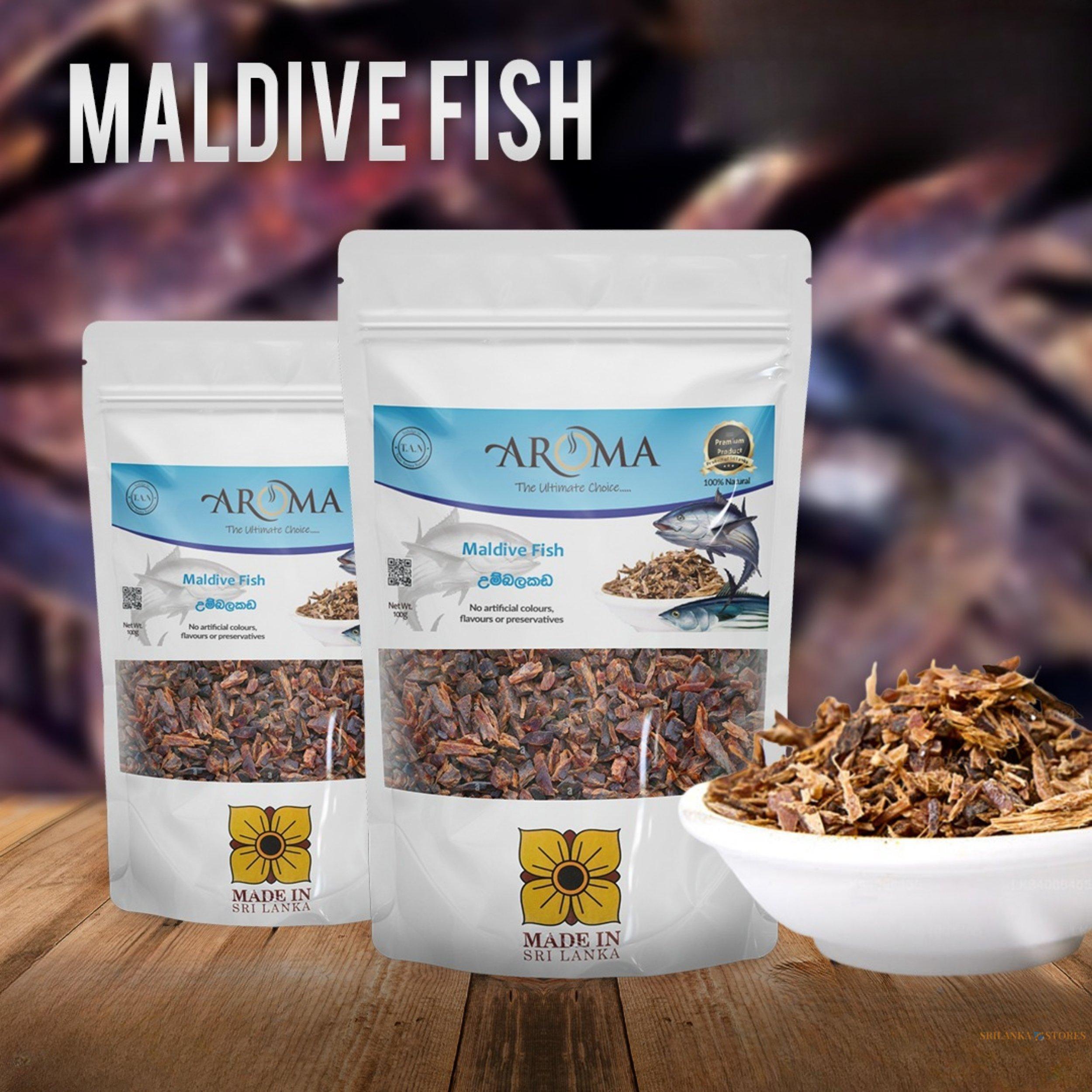
A strong seafood aroma can be normal for dried fish. The aim is a clean, characteristic smell, not a sour, rancid, putrid, ammonia-like or strongly chemical odour. When you’re buying online, ask for clear photographs of the actual product or lot, not only a styled serving photo.
Use this checklist:
A Sri Lankan market study tested selected dried-fish varieties for microbiological and chemical quality. It reported that histamine exceeded 100 mg/kg in some samples, including 33% of imported samples and 13% of locally produced samples in that study. Appearance and aroma are useful checks, but they cannot replace hygienic processing, traceability or appropriate testing, especially for commercial orders. Read the study.
Vacuum packing removes much of the air inside a sealed pouch. For international delivery, an intact, sealed pack can help protect the product from handling, outside odours and moisture exposure. It also makes it easier to check the seal on arrival. Vacuum packing is not, on its own, proof of quality or a substitute for proper processing.
Loose-packed products may offer more flexibility in quantity, but ask how they are protected during storage and shipping. If you choose loose stock, check how it will be packed for transit and whether it arrives with a food-grade inner pouch.
Before ordering, confirm:
A useful label should identify the seafood plainly. Look for the common product name and species, country of origin, ingredients, net weight, batch or lot information, date marking and storage instructions. For prepared or packaged products, check the manufacturer or packer details too.
Fish and crustaceans are different allergen categories. Sprats, tuna and Maldive fish contain fish; dried prawns contain crustaceans. Review the allergen declaration and any cross-contact statement if you or someone in your household has a food allergy.
Check whether salt is listed, and look for declarations of sulphites or other additives where required. Don’t assume “natural” or “traditional” means additive-free. The Sri Lankan fish-products regulations available online are identified as a draft; requirements can vary by destination, product and sale type. For current rules, check the relevant food authority where you live.
Once delivered, inspect the packaging before opening. If a pack is damp, damaged, leaking or has lost its seal, contact the seller for advice rather than putting it away as normal.
For intact packs, follow the printed storage directions. As a general pantry practice, store dried seafood in a cool, dry place, away from sunlight, steam, the cooker and sink. Humid kitchens and repeated changes in temperature can encourage moisture to collect in or around packaging.
After opening:
Storage advice depends on the product and pack. The best-before date and supplier instructions should guide you.
Before placing an international order, check whether the seller ships your product to your destination and whether local rules allow it. Requirements may differ for personal purchases and commercial imports, and can depend on the seafood type, product form and country.
Confirm the following with the seller or local import authority:
For useful examples of Sri Lankan products, browse our dried fish selection and the wider dry food category. Current listings include dried sprats, dried red prawns and Grade 01 Maldive fish. The sprats and prawns listings describe Sri Lankan products; check each live listing for current pack and shipping details.
If you’re sourcing for a shop, restaurant or distributor, request a product specification and a sample before committing to a larger order. Ask about case quantities, lot consistency, packaging options, wholesale availability and the documents your destination market requires. Sri Lanka Stores offers a curated marketplace connecting buyers with Sri Lankan products and suppliers; use the listing details to start the conversation and confirm requirements for your market.
Choosing dried seafood online is easier when you look beyond the product name. Check the species, appearance, pack, label and delivery details, and ask questions whenever something is unclear. We hope this guide helps you bring an authentic taste of Sri Lanka to your pantry, wherever you call home.