If you’re comparing herbal oils, salon services and other ways to care for your hair, it can be hard to know what’s worth trying. The key is to match your expectations to what each option can realistically offer.
A traditional oil may fit a soothing scalp-care routine and help condition hair. A salon treatment may offer professional application and a polished feel. Neither should be mistaken for a guaranteed solution to hair loss.
This practical guide covers what to compare, how to read a Sri Lankan hair oil label, and how to choose a product thoughtfully, whether you’re shopping for yourself or sourcing for a salon or wellness shop.
Ayurvedic hair oils are oil-based blends that may include botanical ingredients used in traditional hair care. Depending on the formula, an oil can help condition the hair and reduce friction, which may make strands feel smoother and easier to manage. Gentle massage can also be a relaxing part of your routine.
But conditioning is not the same as new hair growth. Evidence that oils reliably regrow hair is limited and specific to individual products or formulations. A study of one branded oil, for example, cannot establish that all herbal oils, or all products containing a highlighted herb, will have the same effect.
If you’re exploring natural hair fall remedies, keep the distinction clear: an oil may support hair and scalp care, but it cannot identify or treat every cause of shedding. For research context, see this published trial of a specific hair oil.
“Salon treatment” can mean anything from a conditioning mask to a scalp massage or a more specialized service. The ingredients, price and purpose vary, so ask what a treatment includes before booking.
| Factor | Ayurvedic hair oil at home | Salon hair treatment |
|---|---|---|
| Cost | Usually a lower-cost purchase, though you may need to replace the bottle as you use it. | Price varies by salon, service and location; repeated appointments can add up. |
| Ingredients | You can check the carrier oil and listed botanicals before buying. | Ask which products are used and whether you can review their ingredient lists. |
| Effort | Requires following the directions, applying the oil and washing it out if instructed. | Offers professional application, but requires booking, travel and time in the chair. |
| Expectations | Most suitable as a hair-care or conditioning step; results vary by formula and person. | May improve the feel or appearance of hair temporarily; a salon service is not a diagnosis or a guaranteed hair-growth treatment. |
An oil can be a simpler choice if you want control over ingredients and timing. A salon can be appealing if you enjoy the experience or prefer professional application. Compare the actual service and product, not just the word “Ayurvedic” or “salon.”
If your concern is persistent or marked hair loss, speak with a healthcare professional. Salon services are different from medical assessment and evidence-based treatment.
Ingredient lists can help you understand what kind of product you’re choosing. These botanicals have traditional uses in hair-care practices; their presence does not prove that a finished oil will regrow hair.
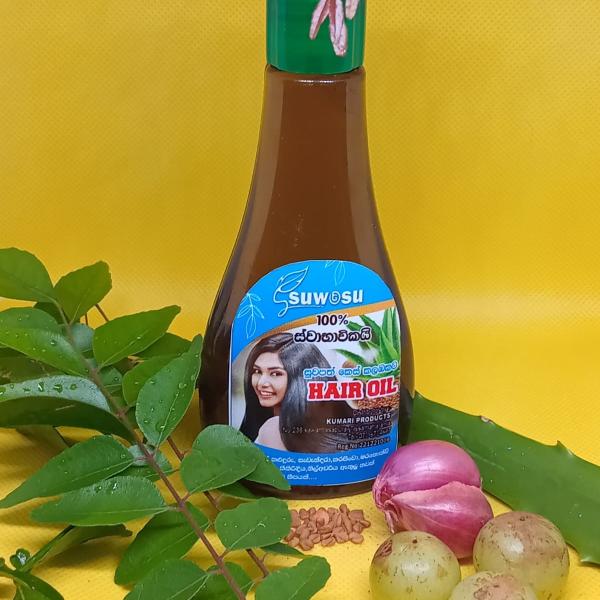
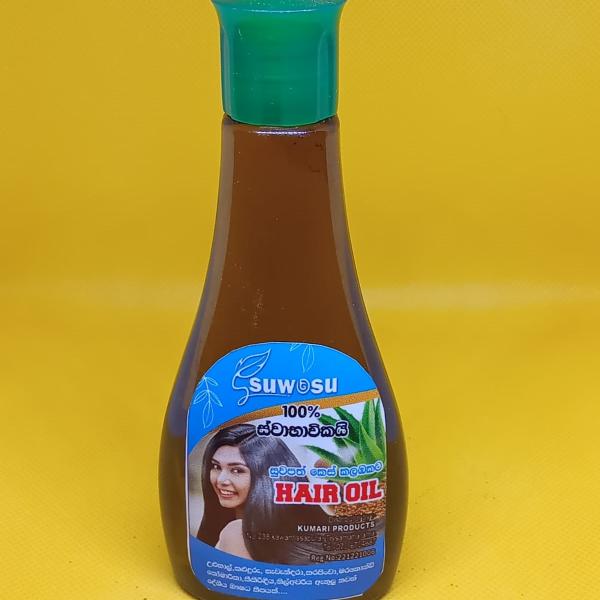
Formulas differ. For example, the Suwosu Hair Oil listing names fenugreek, black seeds, vetiver, curry leaves and aloe among its ingredients. Treat product descriptions as a starting point, then check the packaging for the complete ingredient information and directions.
The best Ayurvedic oil for hair growth is not necessarily the one with the longest list of herbs or the boldest promise. A useful buying guide starts with transparency.
Look for a label that makes it easy to find:
Be cautious of products with no full ingredient list, no identifiable maker, missing batch or expiry details, or packaging that appears opened or decanted. A strong perfume alone doesn’t establish that an oil contains useful botanicals. Likewise, color and scent are not reliable ways to verify authenticity.
Claims such as “guaranteed regrowth,” “permanent results,” or dramatic changes in days deserve extra scrutiny. “Herbal,” “natural” and “Ayurvedic” describe a product’s positioning or tradition; they do not by themselves prove its safety or effectiveness.
Sri Lanka Stores brings together products from Sri Lankan sellers and makes them available to shoppers internationally. Browse the Ayurveda and herbal collection to explore available options and review product details.
Natural ingredients can still irritate skin or cause an allergic reaction. Before applying a new oil across your scalp, follow the product’s patch-test instructions. If none are provided, apply a small amount to a discreet patch of skin, such as the inner forearm, and observe it for 24–48 hours.
Stop using the product if you notice burning, itching, swelling, blistering or a rash. A home patch test is only a basic precaution; it does not guarantee that a product will suit you or replace professional allergy testing. Fragrances and essential oils may be particularly relevant for people with sensitive skin. For more information, see DermNet’s guide to allergic contact dermatitis from essential oils.
Use the oil only as directed, avoid contact with your eyes, and do not apply it to broken or irritated skin unless a qualified professional advises you to.
Choose one product and use it consistently according to its label rather than adding several new oils and treatments at once. That way, it’s easier to notice whether you like the feel of the product, or whether it causes irritation.
Keep expectations measured. Hair-care changes can take time to assess, and a smoother or shinier appearance does not necessarily mean that hair density has changed. If you want to track your hair, take occasional photos in similar lighting and look for changes over time rather than judging from day to day.
For a routine that stays manageable:
If you’re choosing oils for your business, request clear ingredient, batch and expiry information before placing a bulk order. Consider how the product fits your customers’ preferences, price range and local requirements for selling cosmetics or wellness products. Avoid making hair-regrowth claims unless they are appropriately substantiated and permitted in your market.
Sri Lanka Stores offers a curated range of Sri Lankan products for individual shoppers and business buyers, with wholesale and bulk-order options and worldwide shipping. Contact the team through the website to discuss availability and ordering.
An Ayurvedic hair oil can be a welcome part of a traditional hair-care routine, especially if you value a simple, sensory step and know what’s in the bottle. Compare ingredients, effort, cost and realistic expectations with any salon service you’re considering, and remember that an oil is not a substitute for professional advice about significant hair loss.
If hair loss is sudden or severe, or you have a painful, itchy, scaly or otherwise concerning scalp condition, consult a healthcare professional or dermatologist. With a transparent product and a routine that suits you, you can explore Sri Lankan hair care with care and confidence.
May your search lead you to a routine that feels right for you, and a little piece of Sri Lankan tradition wherever you call home. 🌿