A beautiful batik piece does more than add colour to your wardrobe. Its flowing fabric and intricate motifs carry the character of a craft shaped by patient hands and individual choices. Whether you’re looking for a special-occasion Sri Lankan batik saree or a relaxed batik dress online, knowing what to look for can make choosing the right piece feel simple.
This guide covers batik’s distinctive details, Kandyan osariya styling, dress fit, fabric checks and practical tips for ordering from abroad.
Batik is a wax-resist dyeing technique: wax is applied to parts of the cloth to help resist dye, and the fabric is dyed in stages to build colour and pattern. When the wax is removed, the reserved areas create the design. Depending on the method and pattern, fine irregular lines, sometimes called a crackle effect, may appear where wax has cracked during the process.
These small variations are part of the appeal. A hand-worked design may have slight differences in line, colour or motif placement, giving each piece its own character. At the same time, variation alone doesn’t prove that a fabric is handmade. Look for clear details about the process, maker and material.
Sri Lanka’s batik sector continues to develop its craft and quality practices. The National Design Centre of Sri Lanka describes work on Good Manufacturing Practices for batik, with guidance spanning production stages and quality expectations.

A saree offers plenty of ways to drape and style a long piece of cloth. The osariya, also called a Kandyan saree, is a distinctive Sri Lankan draping style. If you’re shopping for one, check whether the listing describes a complete ready-to-wear outfit, a saree length with jacket or blouse fabric, or a partly stitched set. These are not always the same.
For example, the handmade Sri Lankan batik saree from YELI Fashion is listed as super cotton, seven yards long, with a matching jacket piece, and suitable for saree and osariya styles. Use the product details as a starting point, then confirm the included pieces and length before you order.
Consider these questions:
For more options, browse the Sri Lanka Stores saree collection and women’s batik.
A batik dress brings the craft into a ready-to-wear shape, with the appeal of a patterned textile and the ease of a familiar silhouette. Styles can range from simple day dresses to more detailed designs with shaped sleeves, necklines or side slits. Sri Lankan batik shirts and sarongs offer other ways to wear the patterns casually.
When you shop for a batik dress online, start with the garment’s actual measurements rather than relying on the letter size alone. Compare the size chart with a dress that fits you comfortably. Check:
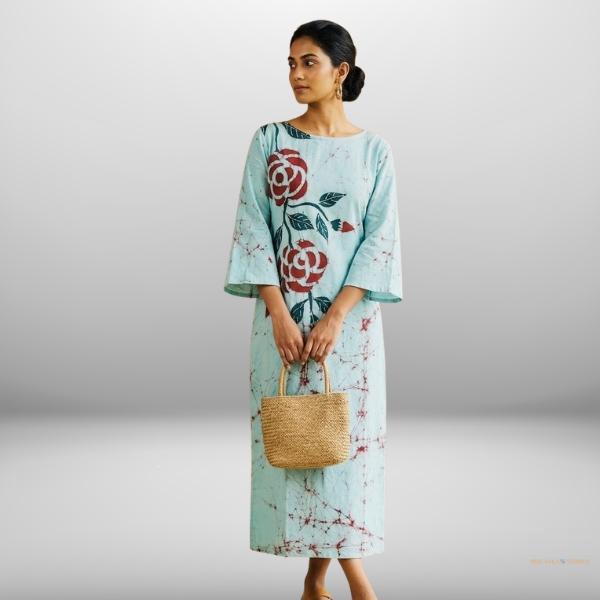
One example in the Sri Lanka Stores batik dress collection is a light-blue design with rose motifs, a boat neckline and three-quarter bell sleeves. Its listing offers sizes from S to 3XL and includes a size chart in the product photos. Always use the specific listing’s latest measurements and options when choosing your size.
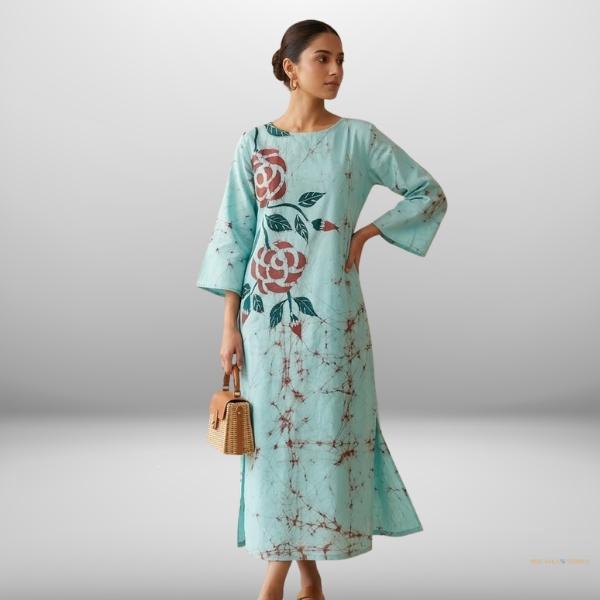
Product photos are useful, but a few extra details can help you judge whether a piece fits your expectations. Look for multiple views, readable fabric information and a product description that explains what the garment includes.
Ask whether the fabric is cotton, voile, silk or a blend, and whether the listing gives its weight or thickness. Fabric weight affects how a garment feels and falls; a lighter cloth may flow differently from a more substantial cotton. If the description doesn’t say, contact the seller before purchasing.
Hand-worked motifs can show subtle variation, and wax crackle can be part of the design. Look for an overall pattern that feels intentional, with dye and motif placement that appeal to you. If the photos are limited, request a close-up or a clear image of the reverse side. A crackle pattern, by itself, is not a guarantee of how the cloth was made.
For a finished dress, check that the listing includes clear images of hems, seams and closures where relevant. For a saree, confirm the finished length and width, the state of the edges and whether matching jacket or blouse material is included.
Pro Tip: Before ordering, ask the seller whether the piece is hand-dyed, printed or made using a combination of techniques. You can also ask where the fabric was made, what fibre it contains and whether the colours have any special care requirements.
Buying from Sri Lanka while you’re in the USA, UK, Australia, Europe or elsewhere can bring a little piece of home closer, or introduce you to a craft you’ll treasure. Before you check out, confirm:
Sri Lanka Stores brings together batik clothing and other Sri Lankan products for shoppers worldwide. Explore the batik category to compare styles, or view a specific batik saree listing and artisan batik dress for product-specific details.
Follow the care instructions supplied with your garment first, since fabric and dye choices can differ from one piece to another. If the listing doesn’t give clear guidance, ask the seller before washing. As a general precaution, wash a new, richly coloured garment separately until you know how the dye behaves. Use a gentle approach, avoid harsh treatment and dry it away from strong direct sunlight where practical.
For a dress, check the care label before ironing and use the recommended temperature. For a saree, store it clean and fully dry, folded neatly or hung in a way that suits the fabric. Thoughtful care helps you enjoy its colour and craftsmanship for years to come.
The right batik piece is the one that feels comfortable, fits your occasion and gives you confidence in what you’re buying. Whether you choose the graceful drape of an osariya, a vibrant saree or an easy-to-wear dress, take time to check the fabric, measurements and making details.
We hope your search leads you to a piece you’ll love wearing, and to a meaningful connection with Sri Lankan artistry, wherever you call home.