When you compare Ceylon tea vs green tea, you are comparing more than two colors in your teacup. You are exploring different processing methods, flavor profiles, caffeine levels, and antioxidant compounds.
In this guide, “Ceylon tea” refers mainly to Ceylon black tea: tea grown in Sri Lanka and fully oxidized after picking. Green tea, meanwhile, is minimally oxidized and may come from Sri Lanka, China, Japan, or another tea-growing region.
Both can be part of a balanced lifestyle. The better choice depends on what you enjoy and what you want from your daily cup. ☕
| Feature | Ceylon Black Tea | Green Tea |
|---|---|---|
| Origin | Grown in Sri Lanka | Grown in many countries, including Sri Lanka |
| Processing | Fully oxidized | Minimally oxidized |
| Typical caffeine | Around 40–70 mg per 8-ounce cup | Around 20–45 mg per 8-ounce cup |
| Main polyphenols | Theaflavins and thearubigins | Catechins, especially EGCG |
| Taste | Brisk, bright, citrusy, full-bodied | Fresh, vegetal, grassy, floral |
| Brewing temperature | Approximately 90–96°C | Approximately 70–80°C |
| Best for | Strong morning tea and milk tea | Lighter, delicate cups and gentle sipping |
These figures are general guidance, not fixed rules. Leaf size, quantity, water temperature, steeping time, and cup size all influence the final result.
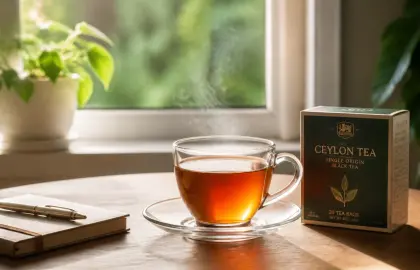
Ceylon is the historic name for Sri Lanka, and Ceylon tea is a proud expression of the island’s mountains, rainfall, soil, and tea-making heritage.
As the leaves oxidize, they develop a deeper color and richer flavor. This gives Ceylon black tea its familiar amber-gold liquor, clean aroma, and lively character.
Depending on where it is grown, your cup may reveal different notes:
You can enjoy Ceylon black tea plain, with milk, or as the foundation of a stronger breakfast blend. It has enough structure to remain flavorful even when served over ice or paired with a sweet snack.
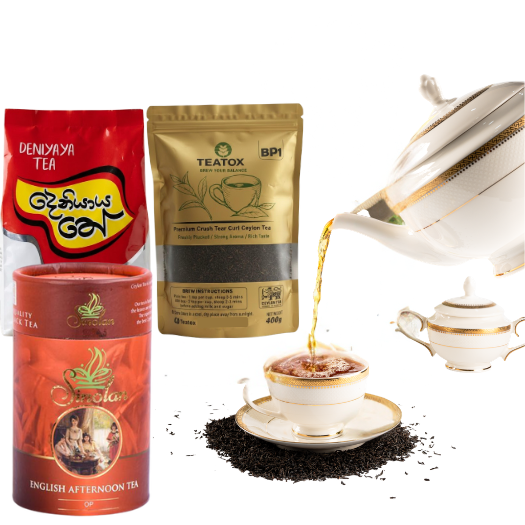
For a traditional experience, explore our Sri Lankan tea collection, which includes pure Ceylon black teas, specialty blends, tea bags, and handcrafted options.
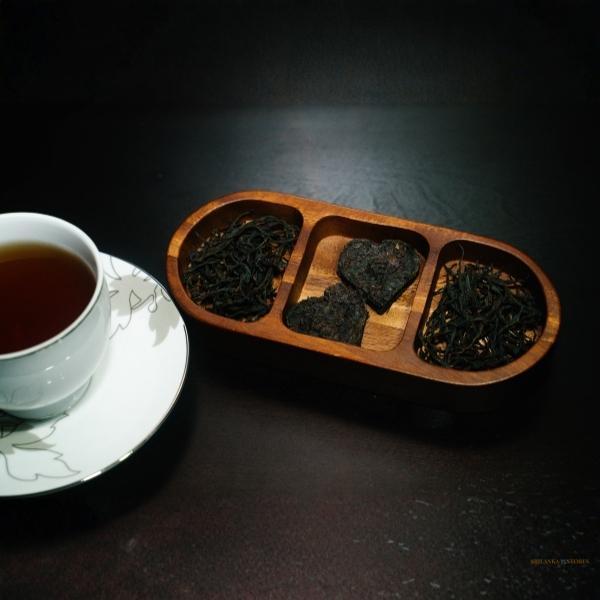
Green tea is made by limiting oxidation soon after the leaves are picked. This preserves more of the leaf’s naturally fresh, green character and keeps its flavor lighter than black tea.
A well-brewed green tea can taste:
Green tea is not one single flavor. Japanese green teas can be vibrant and savory, Chinese green teas may be nutty or floral, and Ceylon green tea often offers a bright, clean profile with a distinctive Sri Lankan character.
If you prefer a lighter cup that feels fresh rather than robust, green tea may be the better fit. It is also a thoughtful choice for afternoon sipping when you want moderate caffeine without the deeper intensity of black tea.
Sri Lanka Stores also offers Ceylon green tea from the Knuckles region, allowing you to experience green tea grown in Sri Lanka’s vibrant mountain landscape.

In a typical brewed cup, Ceylon black tea usually contains more caffeine than green tea. A standard 8-ounce serving may provide approximately:
For comparison, the Mayo Clinic lists around 48 mg of caffeine for brewed black tea and approximately 29 mg for brewed green tea per 8-ounce serving. However, real-world amounts vary considerably.
Your cup may contain more caffeine if you:
Choose Ceylon black tea if you want a stronger, more stimulating morning beverage. Choose green tea if you prefer a gentler lift or are more sensitive to caffeine.
Neither is automatically “better.” Your ideal choice may even change throughout the day.
Pro Tip: For a milder cup, use slightly less tea or shorten the steeping time. If you are highly caffeine-sensitive, check product information and speak with a qualified healthcare professional about your personal intake.
Tea naturally contains polyphenols: plant compounds that have been widely studied for their antioxidant properties. The types and proportions differ because green and black teas are processed differently.
Green tea is especially rich in catechins, a family of polyphenols that includes EGCG, short for epigallocatechin gallate.
EGCG is one of the most studied compounds in green tea. Research has explored its antioxidant activity and possible relationship with cardiovascular and metabolic health. However, brewed tea is a beverage: not a medical treatment: and research findings should not be interpreted as a promise of specific health results.
During black tea oxidation, some catechins transform into compounds called theaflavins and thearubigins. These contribute to the tea’s deep color, briskness, body, and satisfying finish.
Theaflavins are particularly associated with black tea. They are different from EGCG, but that does not mean black tea lacks antioxidant value. Reviews of tea polyphenols suggest that both green tea catechins and black tea theaflavins contribute to antioxidant activity.
In simple terms:
Taste is often the deciding factor in the Ceylon tea vs green tea conversation.
Ceylon black tea can become more tannic and bitter when over-steeped. Green tea can also taste sharp or harsh when prepared with boiling water. Good brewing makes a remarkable difference.
The right brewing method helps you taste the intricate character of each tea.
For an interactive presentation, the Premium Handmade Black Tea Ball slowly unfurls as it steeps, revealing carefully rolled leaves and releasing a rich aroma.
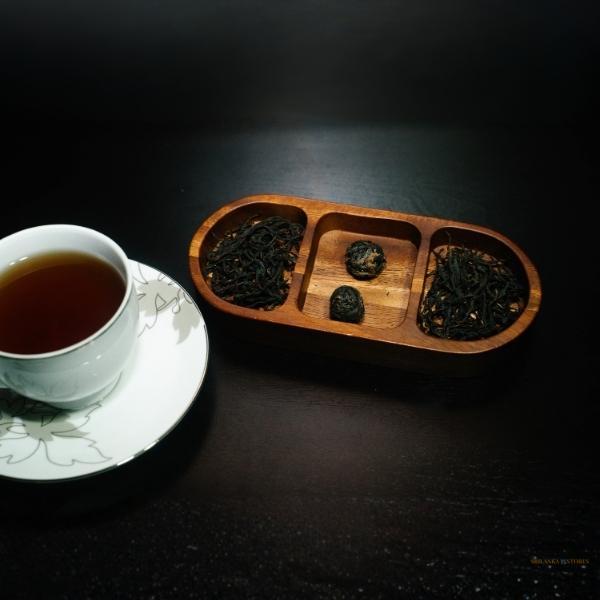
Green tea generally benefits from cooler water. If the water is boiling, allow it to rest for a few minutes before pouring.
Pro Tip: Keep a small note of your favorite temperature, leaf quantity, and steeping time. Your perfect cup is personal, and tiny adjustments can reveal new floral, citrus, or earthy notes.
Your choice can be wonderfully simple.
You do not have to choose only one. Many tea lovers enjoy Ceylon black tea in the morning and green tea later in the day. Others keep both on hand and select according to the season, meal, mood, or occasion.
So, which wins in the Ceylon tea vs green tea comparison?
Ceylon black tea is the choice for depth, briskness, heritage, and a confident cup. Green tea is the choice for freshness, delicacy, and catechin-rich character. Both offer a beautiful connection to the tea plant, shaped by craftsmanship and thoughtful preparation.
At Sri Lanka Stores, you can discover authentic teas sourced from Sri Lankan producers and enjoy the island’s timeless tea culture wherever you are. Browse the full tea catalog and find a cup that feels truly your own.
May every infusion bring you warmth, discovery, and a little taste of Sri Lankan heritage. 🍃