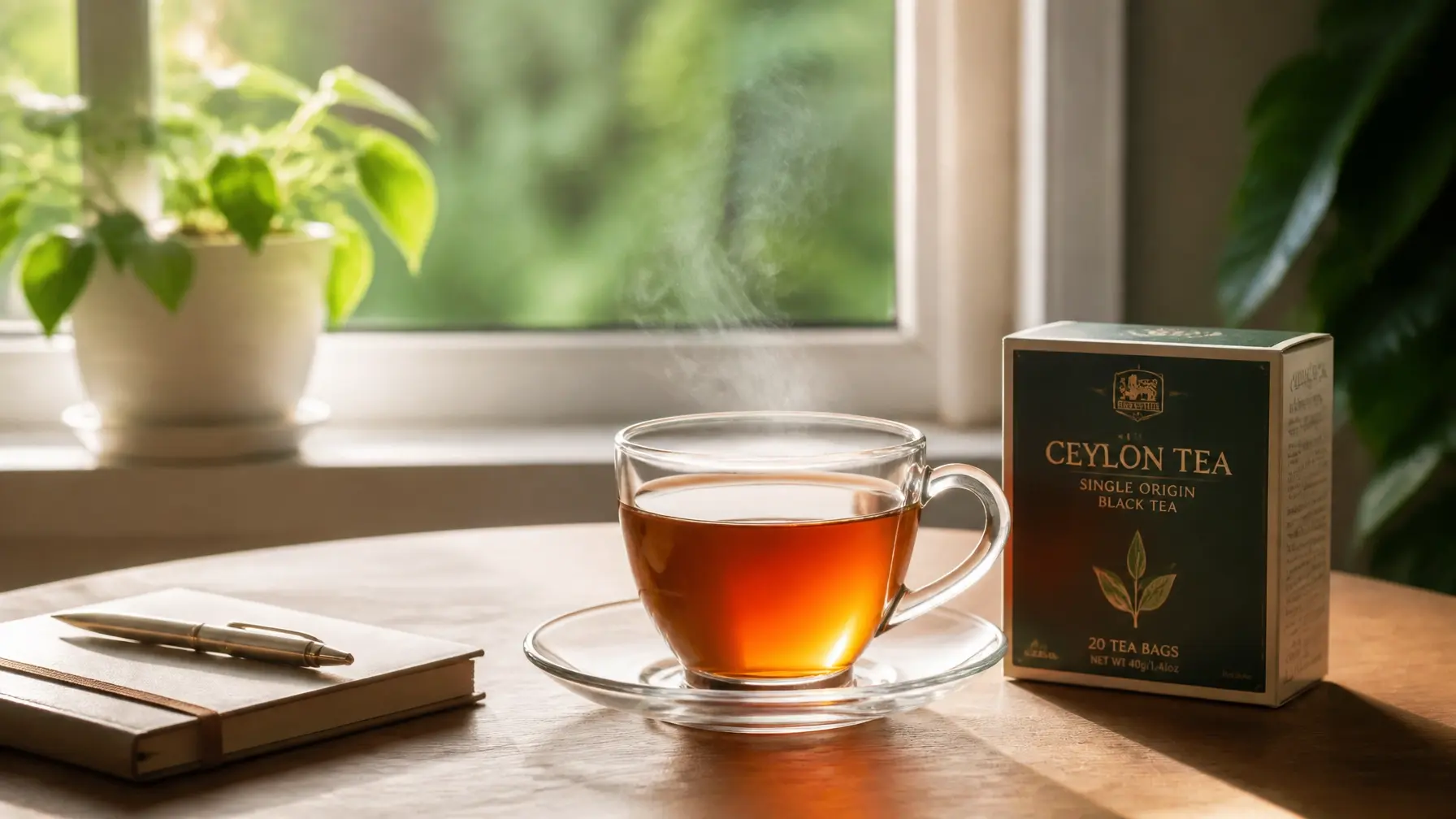
There is a quiet pleasure in brewing Ceylon black tea well. The water begins to brighten. The leaves release a warm, fragrant aroma. Then, almost magically, your cup takes on a vibrant amber colour with a clean, refreshing finish.
But even authentic tea can taste very different depending on how you brew it.
The good news? Perfecting Ceylon black tea brewing does not require complicated equipment. With fresh water, the right temperature, a measured amount of tea, and a little attention to steeping time, you can enjoy a balanced cup that reflects the character of Sri Lanka’s tea-growing regions.
For a classic, well-rounded cup, begin with these measurements:
This is your starting point: not a strict rule. A delicate high-grown tea may prefer a shorter infusion, while a bold low-grown tea can often handle a little more heat and time.
Pro Tip: Change only one variable at a time. If your tea is too strong, shorten the steep before reducing the amount of tea. This makes it easier to understand the character of each leaf.
Water makes up most of every cup, so its quality has a direct effect on flavour.
Use fresh, cold water whenever possible. Water that has been boiled repeatedly may taste flat because some of its natural oxygen has been lost. If your tap water has a strong mineral or chlorine taste, filtered water can help reveal the tea’s natural brightness.
The best water for Ceylon black tea is generally:
Avoid using water that has been sitting in your kettle overnight, especially if it has absorbed surrounding kitchen aromas. Tea leaves are delicate and can easily pick up unwanted flavours.
For most Ceylon black teas, the ideal brewing temperature is just below boiling: around 93–95°C.
If you do not have a temperature-controlled kettle, bring the water to a full boil and let it rest briefly before pouring. This small pause helps bring the temperature into a comfortable range for most black teas.
Water that is too cool may produce a thin, underdeveloped cup. Water that is too hot can extract bitterness more quickly, particularly when paired with a long steep.
That said, robust black tea styles are designed to withstand high temperatures. If you are brewing a strong breakfast-style Ceylon tea, water close to boiling can help draw out its body, colour, and brisk character.
The amount of tea you use determines the concentration of your cup. For loose leaf Ceylon black tea, a reliable starting point is:
2.5 grams of tea per 220–240 ml of water
This is roughly equivalent to one level teaspoon per standard cup, although the exact volume of a teaspoon depends on the size and shape of the leaves.
Broken-leaf teas and finer grades are often denser than large whole leaves. A heaped teaspoon of a fine tea may contain considerably more tea than a level teaspoon of a large-leaf style.
Use slightly more tea if you prefer:
Use slightly less tea if you prefer:
When brewing a larger pot, measure by volume rather than guessing. For example, use approximately 10 grams of loose tea per litre of water, then adjust according to taste.
Steeping time controls how much flavour, colour, aroma, and astringency move from the leaves into the water.
For most Ceylon black tea, begin with 3–4 minutes.
Try not to leave the leaves sitting in the water after the tea has reached your preferred strength. Once the infusion is ready, remove the infuser or pour the tea completely into another vessel. The leaves will continue extracting if they remain submerged, which can make the cup taste dry or harsh.
Remember: More steeping time does not always mean better flavour. If you want a stronger cup, adding a little more tea can create greater body without introducing excessive bitterness.
Terroir means the environmental character of a growing region, including its altitude, soil, rainfall, temperature, and surrounding landscape. In Ceylon tea, terroir is one of the reasons two black teas from Sri Lanka can taste completely different.
The island’s tea-growing regions range from misty mountain estates to warm southern lowlands. Each setting gives the leaf a distinctive personality.
High-grown teas from areas such as Nuwara Eliya develop in cool mountain air. They are often:
To preserve these finer qualities, brew a high-grown tea at approximately 85–90°C for around 3 minutes. If the flavour seems too soft, increase the temperature slightly before adding more steeping time.
Mid-grown teas often offer a pleasing middle ground. They can bring together aroma, brightness, and moderate body.
Try:
These teas are versatile and can be enjoyed plain, with a splash of milk, or alongside sweet and savoury snacks.
Low-grown teas from warmer regions such as Ruhuna often produce a darker infusion with a rich, malty, and powerful character.
They are well suited to:
For a strong breakfast-style cup, these teas can offer satisfying depth and a lingering finish.

Pre-warming is a simple step that can improve consistency.
Pour a little hot water into your empty teapot or cup. Swirl it around, then discard the water before adding your tea leaves. This prevents the hot brewing water from losing too much heat when it touches a cold vessel.
It is especially helpful when:
This small ritual also creates a more mindful brewing experience. The fragrance begins before the first sip.
Ceylon black tea is wonderfully versatile. Some cups are naturally smooth and sweet, while others are brisk, bright, or pleasantly astringent.
Taste your tea plain first. Notice:
Then decide how you would like to enjoy it.
Milk can soften a bold tea and create a comforting, rounded cup. Sugar can highlight the tea’s natural warmth. Delicate high-grown teas are often best enjoyed without additions so their intricate aromas remain clear.
For an authentic selection of Sri Lankan teas, explore the Sri Lankan Tea collection at Sri Lanka Stores, including pure Ceylon black tea bags, loose-leaf options, handmade teas, and specialty blends.

Try one of these adjustments:
You can:
The issue may be the water or storage. Use fresh filtered water and store your tea in an airtight container away from heat, moisture, sunlight, spices, and strong-smelling foods.
Choose a fuller-bodied mid- or low-grown Ceylon tea, or use a broken-leaf grade designed to produce a stronger infusion.
Even the finest tea can lose its vibrancy when exposed to air, humidity, light, or strong aromas.
Keep your tea:
Avoid storing tea beside the kettle or stove, where heat and steam can gradually affect freshness.
The beauty of Ceylon black tea brewing is that it gives you a dependable foundation while leaving room for discovery. Start with 2.5 grams of tea, 93–95°C water, and a 3–4 minute steep. Then adjust gently according to the tea’s origin and your own taste.
A high-grown tea may whisper with floral brightness. A low-grown tea may arrive with bold malt and deep colour. Both express the vibrant landscape and timeless craftsmanship of Sri Lanka.
At Sri Lanka Stores, you can discover authentic teas sourced from Sri Lankan producers and browse the wider tea and grocery collection for personal shopping, gifting, or business orders.
May every cup bring you warmth, connection, and a little taste of home. ☕