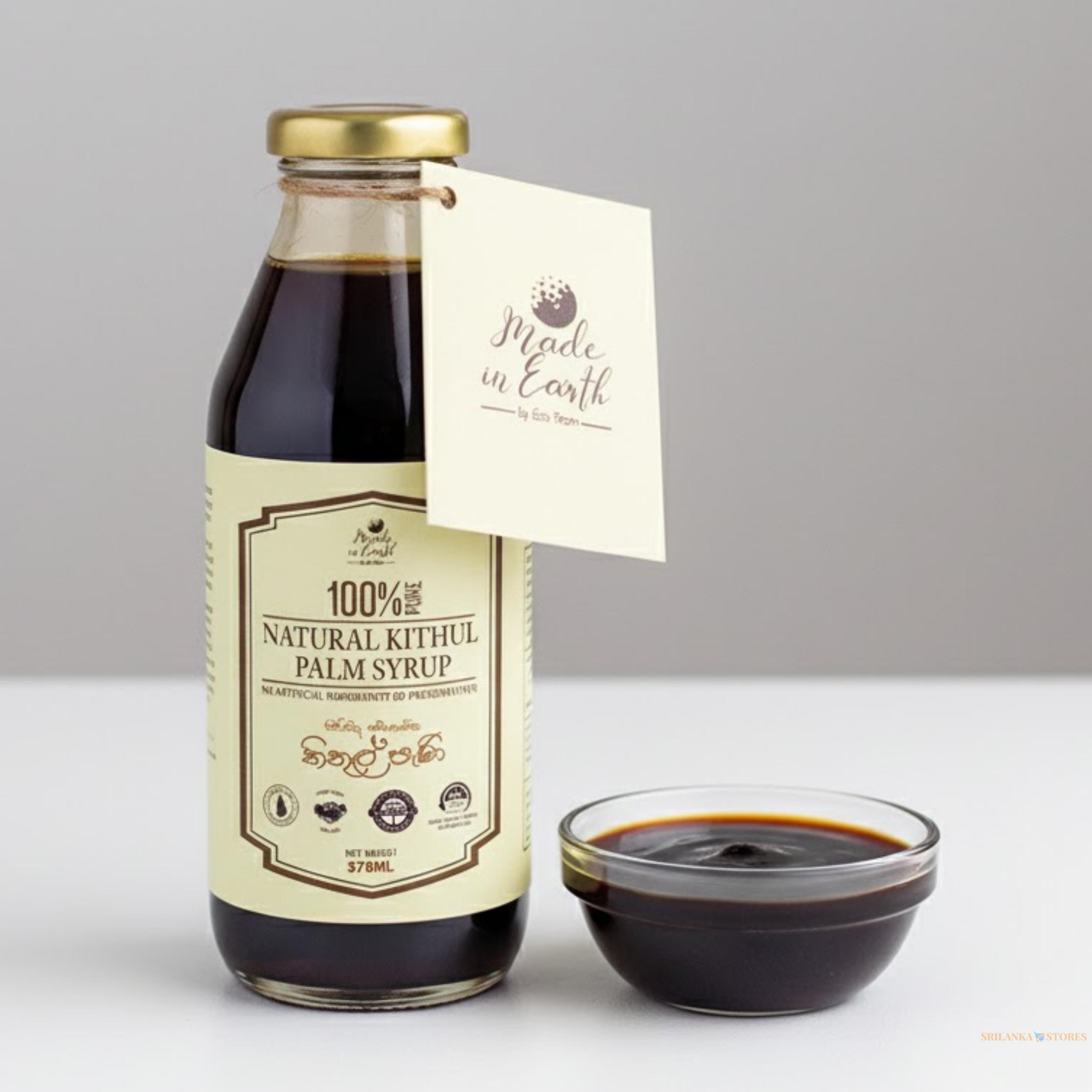
Have you ever tasted a syrup that is sweet, smoky, floral and gently caramelised all at once? Kithul treacle is one of Sri Lanka’s most distinctive traditional pantry foods: a deep amber-to-brown syrup made from the sap of the kithul palm.
Known locally as kithul pani, meaning “kithul syrup,” it is valued for its complex flavour, natural sweetness and connection to generations of Sri Lankan craftsmanship. For Sri Lankan families living abroad, finding authentic kithul treacle can also bring a familiar taste of home to the pantry.
In this guide, you’ll discover what kithul treacle is, how it is made, how to identify quality, and why this timeless palm syrup remains important to Sri Lankan heritage.
Kithul treacle is a naturally concentrated syrup made from the fresh sap of the fishtail palm, scientifically known as Caryota urens. This palm grows in parts of Sri Lanka and other regions of South Asia.
The sap is collected from the palm’s flower stalk and gently heated until much of its water content evaporates. The result is a thick, glossy syrup with a rich colour and a flavour that is far more layered than ordinary refined sugar syrup.
Depending on the palm, season and traditional processing method, kithul treacle may range from:
The word treacle generally refers to a thick sweet syrup. Kithul treacle is distinctive because its character comes from palm sap and careful traditional reduction: not simply from refined cane sugar.
For an authentic taste of Sri Lankan pantry culture, explore the wider Sri Lankan groceries collection at Sri Lanka Stores.
Kithul production begins high above the ground, with the careful work of an experienced kithul tapper.
The tapper climbs the palm and prepares the flower cluster, also called an inflorescence. By carefully tending and making small cuts around the flower stalk, the tapper encourages the sweet sap to flow. A clean container is then positioned to collect the liquid as it slowly drips from the stalk.

The freshly collected sap is highly perishable, so it is handled quickly. Traditionally, it is:
The heating stage is central to the final flavour. Traditional wood-fire processing can add subtle smoky notes, while the slow reduction deepens the syrup’s natural caramel character.
This is not an industrial shortcut. It is a skilled craft shaped by timing, weather, palm health and the tapper’s experience. Sri Lankan kithul production has been passed through rural communities for generations, providing both a treasured food and an important source of livelihood.
Kithul treacle has a vibrant flavour profile that makes it easy to recognise once you have tasted the real thing.
You may notice:
Some batches are lighter and more delicate, while others are dark, robust and deeply smoky. This variation is part of the charm of a traditionally produced product.
Kithul treacle is sometimes compared with maple syrup, honey or molasses. However, it has its own identity. It is usually less one-dimensional than refined syrups, with a lingering finish that reflects the palm, the season and the method of preparation.
Its texture should be thick and glossy, but still pourable. When drizzled, it should fall in a slow ribbon rather than behaving like a thin sugar solution.

Kithul treacle has long been part of Sri Lankan household and festive food culture. It is often enjoyed in simple ways that allow its flavour to shine.
Traditional uses include:
Kithul also appears in the broader world of Sri Lankan heritage foods, including traditional sweets and festive treats. You can explore related products in the Rasa Kavili collection, which celebrates the country’s intricate confectionery traditions.
This article focuses on the ingredient and its cultural story rather than recipes. The simplest serving ideas are often the most revealing: a spoonful over creamy curd or a small drizzle alongside a warm breakfast can showcase the syrup’s smoky sweetness beautifully.
Many people search for kithul treacle benefits because it is viewed as a more traditional alternative to refined sweeteners.
Kithul treacle may contain naturally occurring compounds from palm sap, including small amounts of minerals and plant-based compounds. It is also often described as having a lower glycaemic impact than refined sugar. However, the nutritional profile can vary between products, and kithul treacle is still a concentrated sweetener.
That means it is best enjoyed thoughtfully.
Potential reasons shoppers choose it include:
It is important not to treat kithul treacle as a medicine or assume that it can prevent or manage a health condition. If you are monitoring blood sugar, follow professional dietary advice and check the product label.
The greatest benefit for many customers is a combination of taste, tradition and ingredient simplicity. Kithul treacle offers a way to enjoy sweetness while supporting the continued appreciation of a distinctive Sri Lankan food heritage.
Because genuine kithul treacle is valued internationally, it is worth reading the label carefully before buying.
Look for wording such as:
Be cautious when a product is described only as “palm syrup” or “treacle” without identifying the palm source. Some products may contain cane sugar, glucose syrup, colouring or other sweeteners.
Authentic kithul treacle is usually:
Colour alone does not prove authenticity. A trustworthy ingredient list and transparent sourcing information are more useful indicators.
Quality producers may explain where the product comes from, how it is collected, or how traditional methods are supported. Clear packaging, a batch or date mark, and appropriate food-safety information are also helpful signs.
Pro Tip: If you are buying kithul treacle for a business, gift hamper or specialty food shelf, request ingredient and shelf-life details from the supplier before placing a bulk order.
Kithul treacle is a concentrated, sugar-rich syrup, but good storage will help preserve its flavour and texture.

Follow these simple guidelines:
Natural syrups can change in texture over time. Always check the product for unusual fermentation, mould, off aromas or unexpected bubbling. When in doubt, follow the package guidance or contact the seller.
Kithul treacle represents more than a sweetener. It reflects a relationship between people, palms and place.
Traditional sap collection does not require the palm to be cut down. Instead, skilled tappers work with the flower stalks while the tree remains standing. With responsible management, this creates a renewable source of income and food for rural communities.
However, the craft also faces challenges. Palm tapping is physically demanding, requires specialist knowledge and may be less attractive to younger generations seeking different livelihoods. Protecting kithul traditions therefore involves more than selling the finished syrup.
It also means supporting:
When you choose a clearly sourced product, you help preserve appreciation for the people and traditional knowledge behind it.
So, what is kithul treacle? It is a traditional Sri Lankan palm syrup made from the sap of the fishtail palm: dark, glossy, naturally sweet and full of character.
But it is also a story of renewal and craftsmanship. It carries the scent of wood smoke, the patience of slow reduction and the skill of palm tappers who continue a heritage shaped over generations.
Whether you are a Sri Lankan living far from home, a curious food lover or a business buyer searching for distinctive pantry products, kithul treacle offers an authentic connection to the island’s vibrant food culture. Explore it alongside Sri Lanka Stores’ coconut products, authentic Ceylon spices and other carefully selected Sri Lankan groceries.
May every spoonful bring a little warmth, memory and shared Sri Lankan heritage to your table. 🌴